Slides from Kenechukwu Nwosu’s Personal Leadership Lecture Series (October 2026) on self-discipline and personal accountability for student leaders.
Download the slides as a PDF (2.3 MB, 10 pages)
Who is a leader?
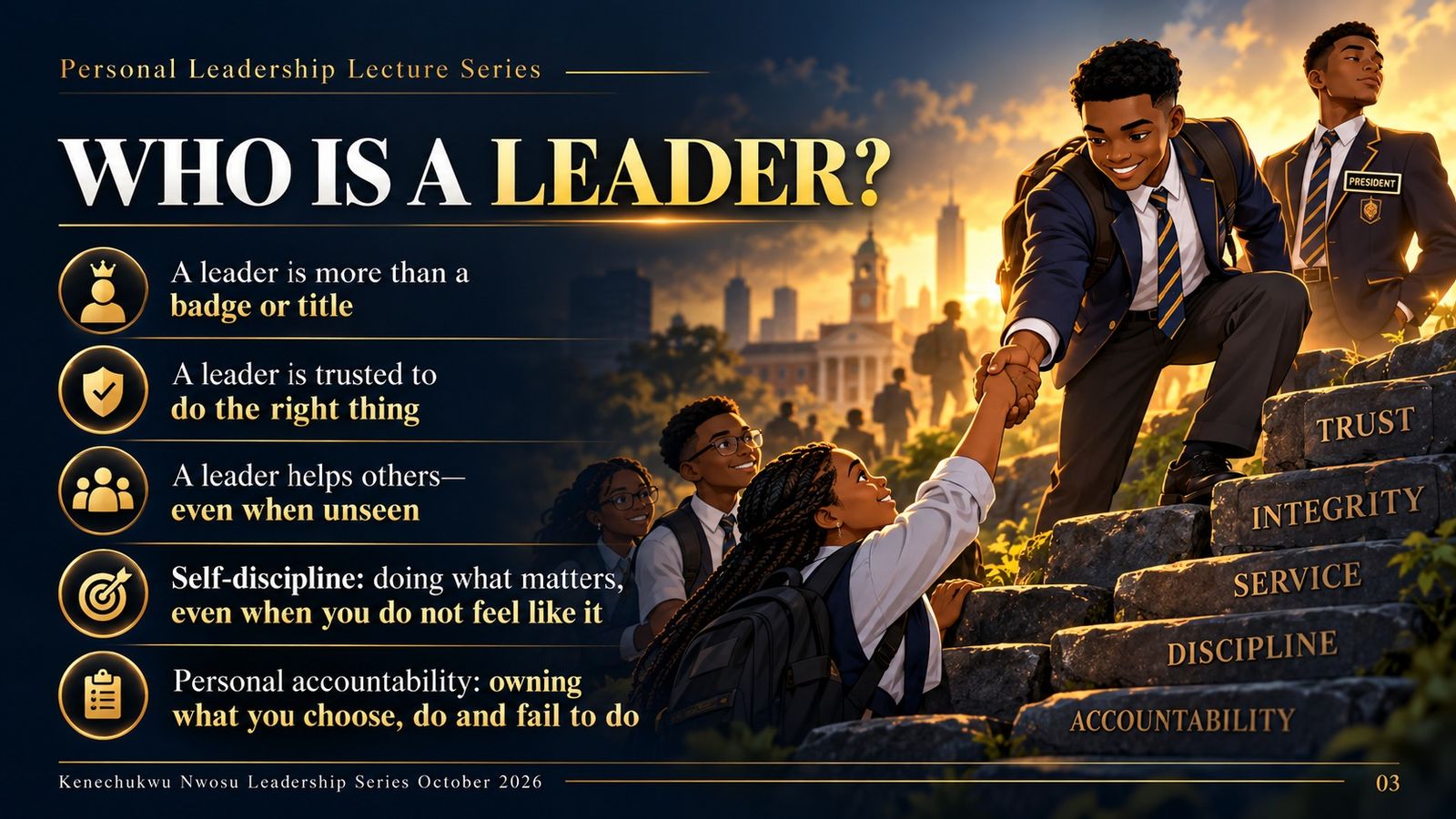
- A leader is more than a badge or title.
- A leader is trusted to do the right thing.
- A leader helps others, even when unseen.
- Self-discipline: doing what matters, even when you do not feel like it.
- Personal accountability: owning what you choose, do and fail to do.
When no one is watching
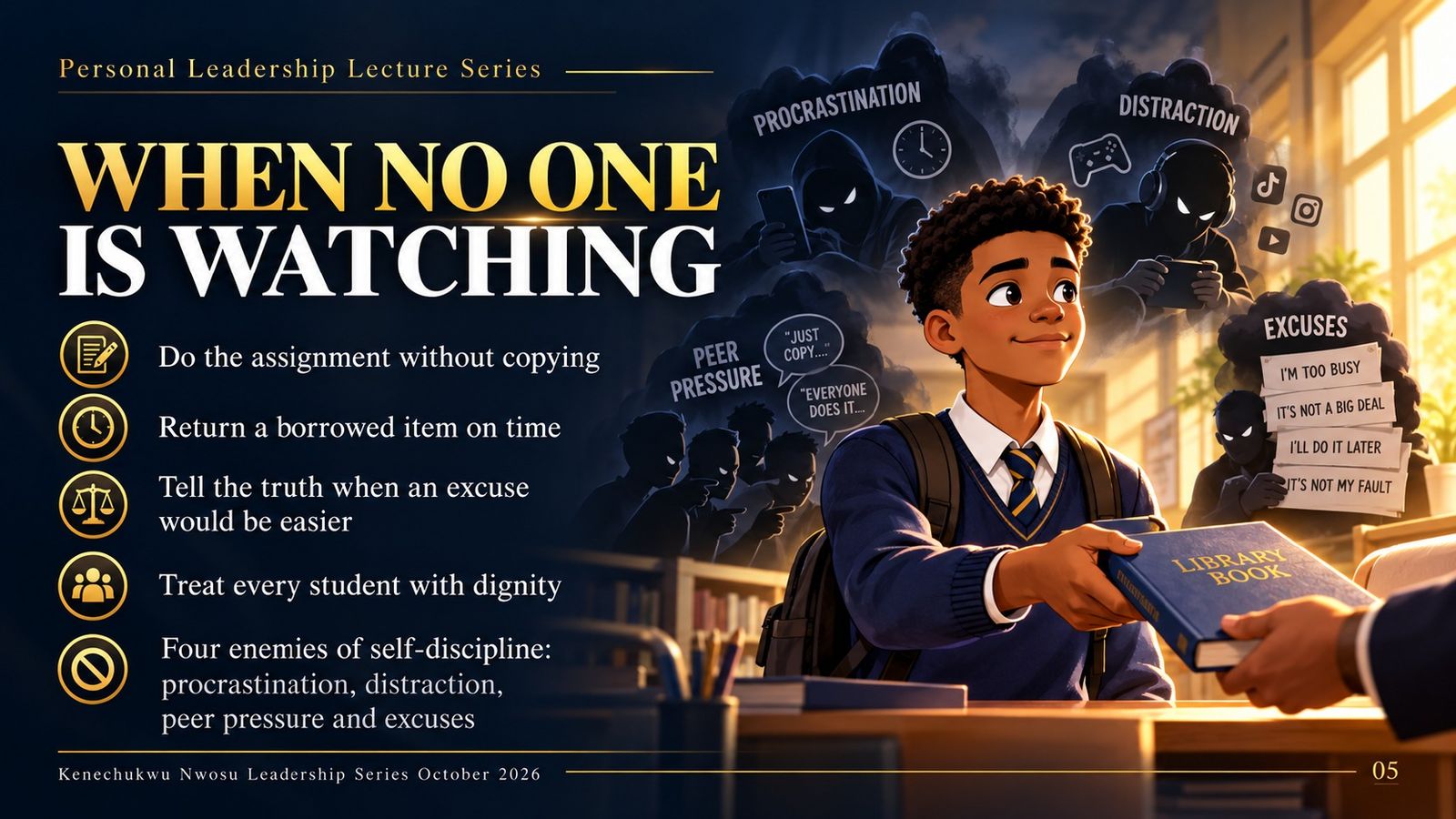
- Do the assignment without copying.
- Return a borrowed item on time.
- Tell the truth when an excuse would be easier.
- Treat every student with dignity.
- Four enemies of self-discipline: procrastination, distraction, peer pressure and excuses.
A student leader has two jobs
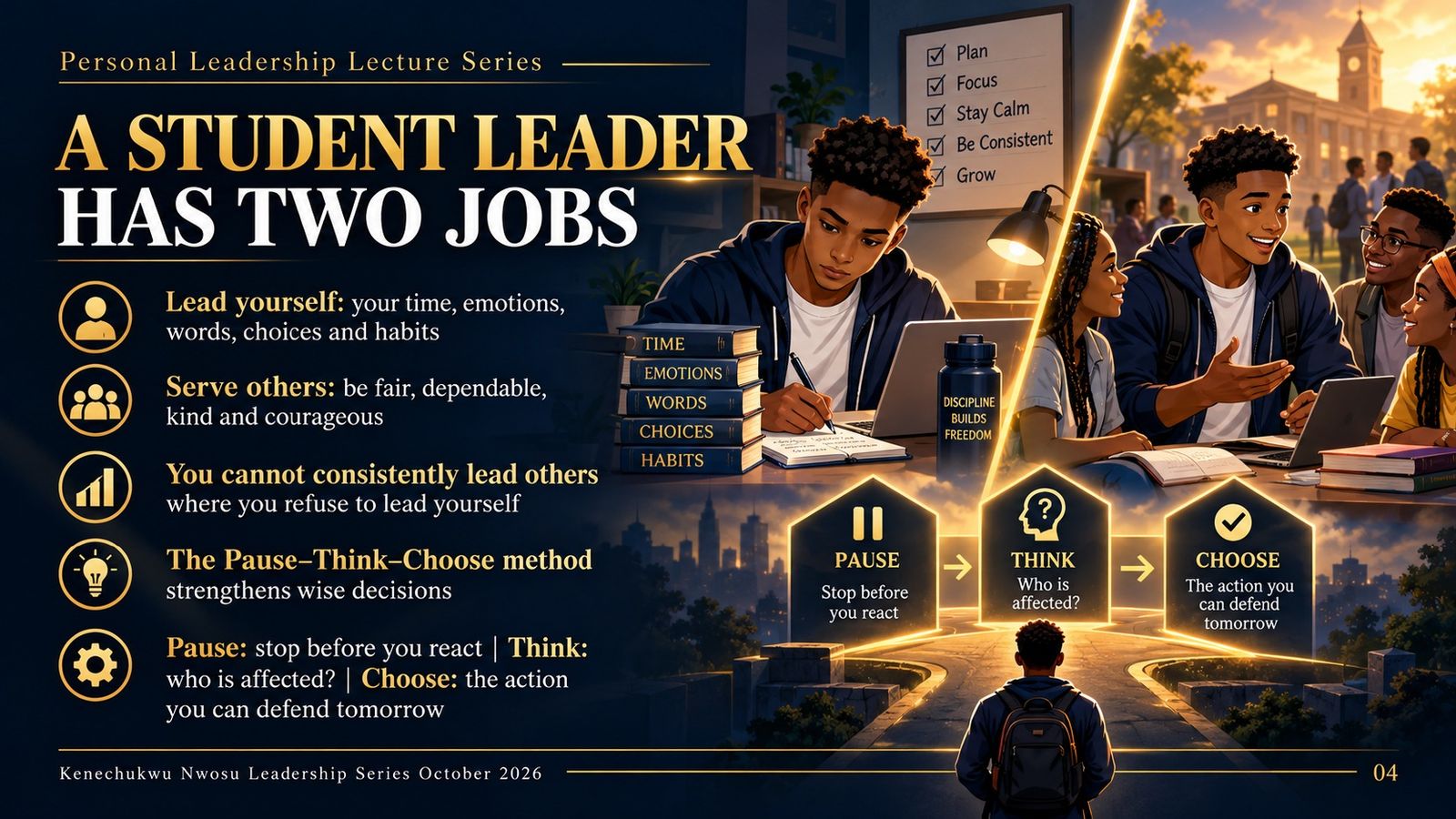
- Lead yourself: your time, emotions, words, choices and habits.
- Serve others: be fair, dependable, kind and courageous.
- You cannot consistently lead others where you refuse to lead yourself.
- The Pause, Think, Choose method strengthens wise decisions.
- Pause: stop before you react. Think: who is affected? Choose: the action you can defend tomorrow.
Time, commitment and trust

- Time is a leadership resource. Use it intentionally.
- Plan priorities before distractions begin.
- Start difficult tasks in small, manageable steps.
- Keeping commitments builds trust: promise carefully, act early, and communicate honestly if delayed.
- Trust is built in small moments: punctuality, follow-through, group work and giving credit.
Accountability is not blame
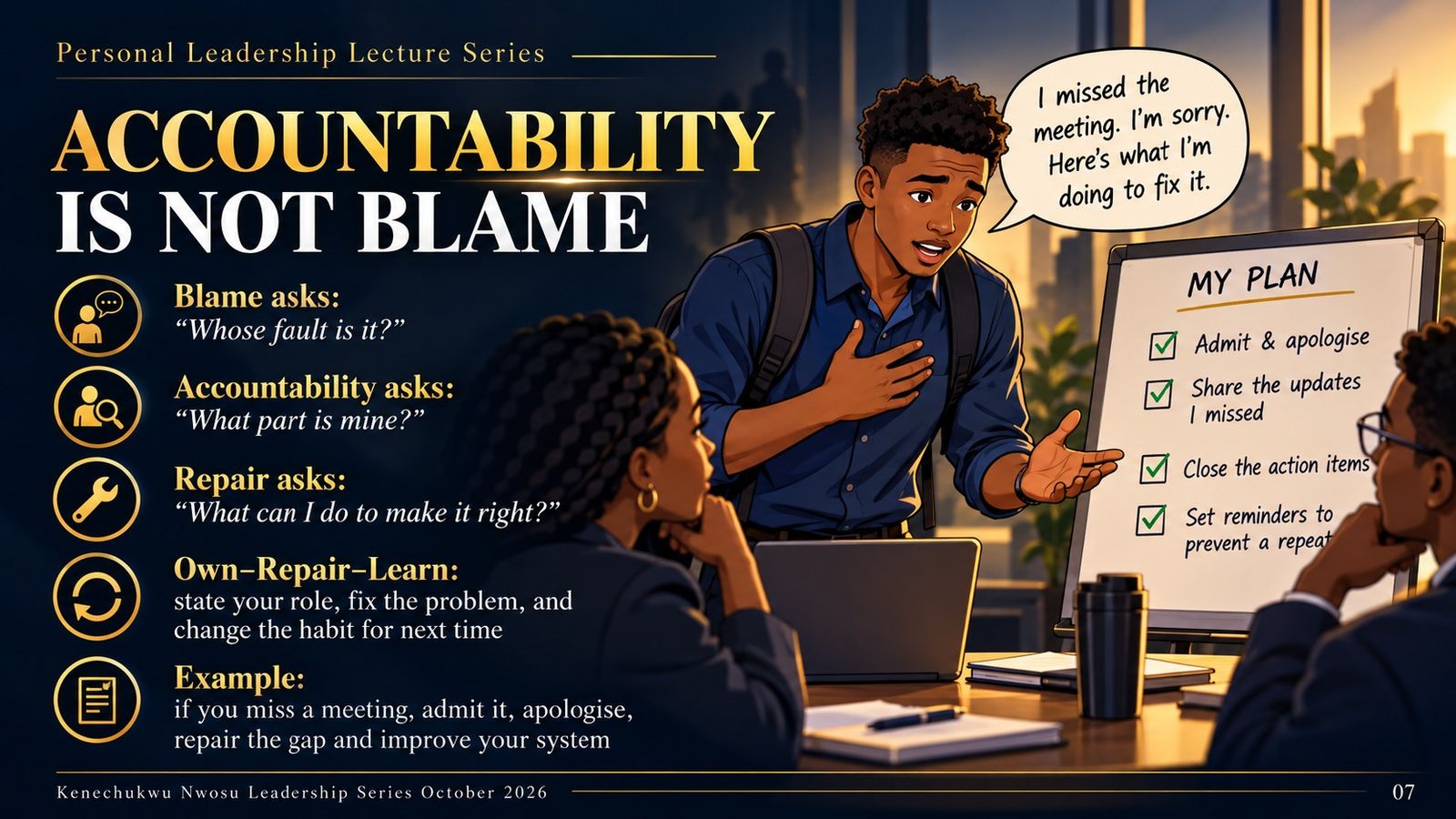
- Blame asks: “Whose fault is it?”
- Accountability asks: “What part is mine?”
- Repair asks: “What can I do to make it right?”
- Own, Repair, Learn: state your role, fix the problem, and change the habit for next time.
- Example: if you miss a meeting, admit it, apologise, repair the gap and improve your system.
Emotional, digital and inclusive leadership

- Emotional self-discipline means controlling anger, fear, jealousy and frustration wisely.
- Pause before speaking, posting or reacting.
- Digital discipline means thinking before you post, share or forward.
- Use technology for learning, not endless distraction, and protect dignity and privacy.
- A fair leader includes everyone, describes information clearly, and supports students with different needs.
The fairness test
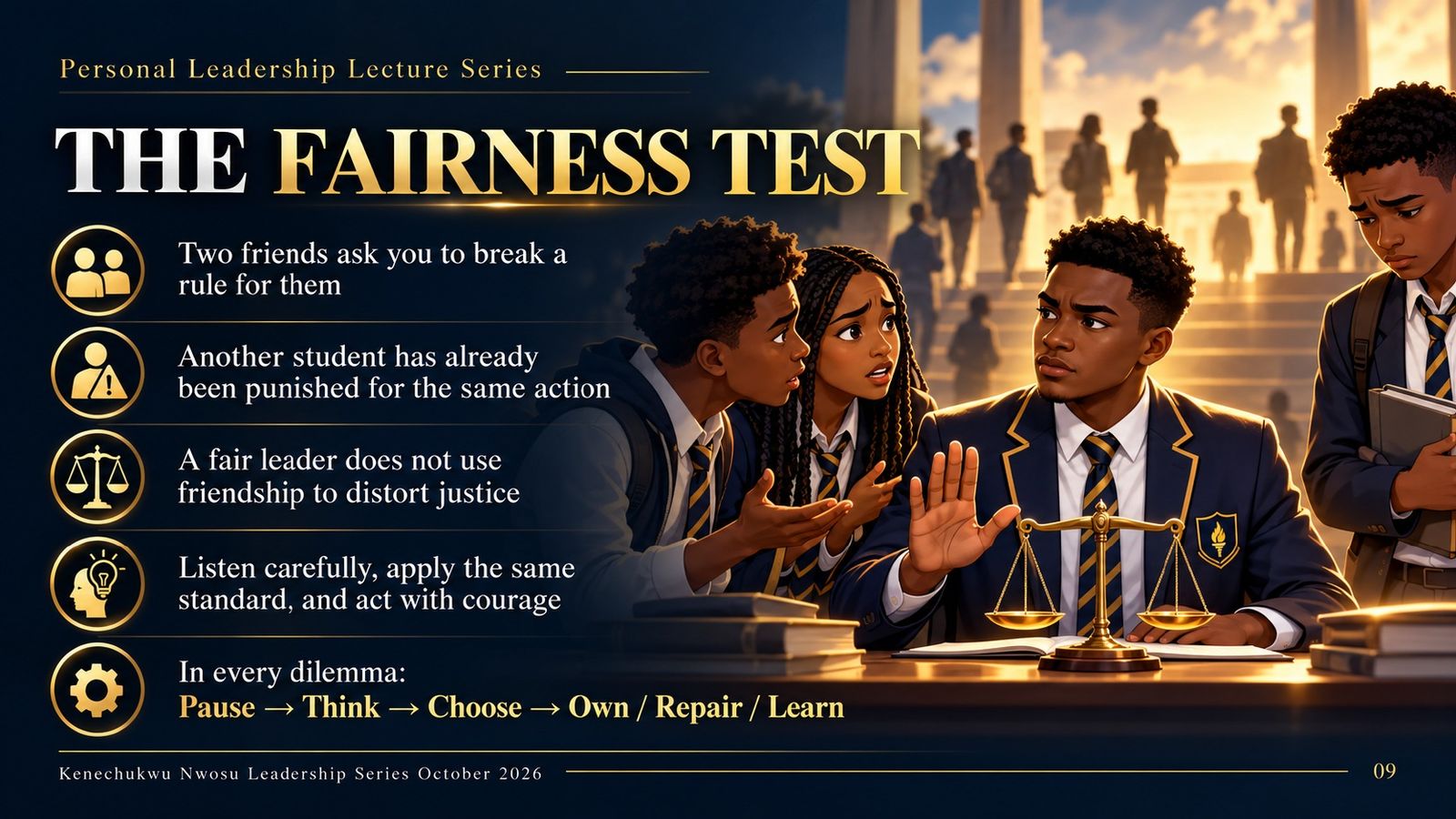
- Two friends ask you to break a rule for them.
- Another student has already been punished for the same action.
- A fair leader does not use friendship to distort justice.
- Listen carefully, apply the same standard, and act with courage.
- In every dilemma: Pause, Think, Choose, then Own, Repair, Learn.
Build habits that make leadership easier
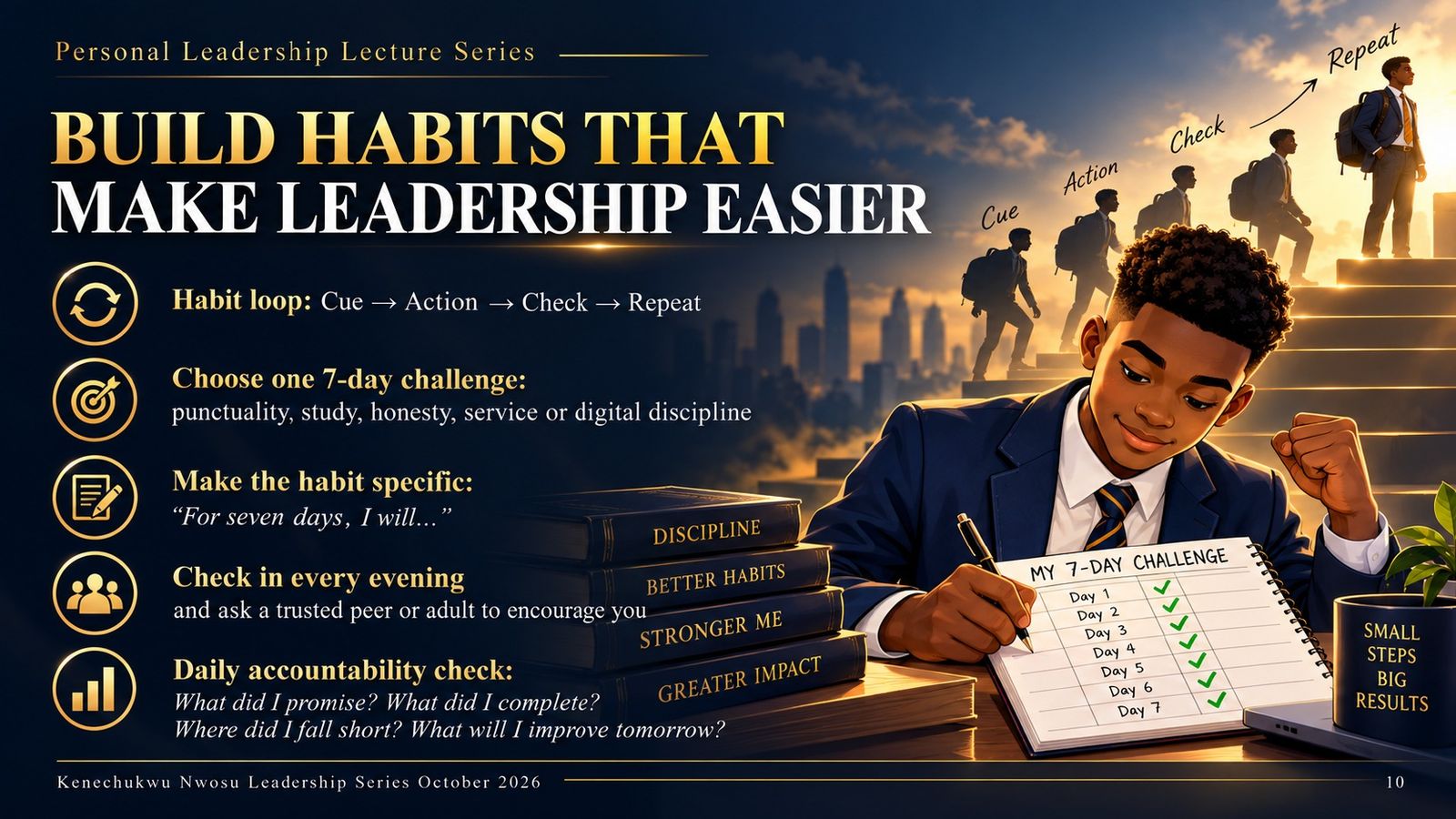
- Habit loop: Cue, Action, Check, Repeat.
- Choose one 7-day challenge: punctuality, study, honesty, service or digital discipline.
- Make the habit specific: “For seven days, I will…”
- Check in every evening and ask a trusted peer or adult to encourage you.
- Daily accountability check: What did I promise? What did I complete? Where did I fall short? What will I improve tomorrow?
My leadership pledge

- I will manage my choices before directing others.
- I will keep commitments or communicate honestly.
- I will own mistakes, make repairs and learn.
- I will lead with fairness, courage and respect.
- Remember: discipline, accountability and service are the foundation of trusted leadership.
Your leadership begins with your next decision.