An executive slide deck by Kenechukwu Nwosu (October 2026): an integrated policy and implementation framework for subnational governments to prevent child marriage and strengthen girls’ rights.
Download the slides as a PDF (3.0 MB, 15 pages)
Executive summary
A practical framework for subnational governments to prevent child marriage and strengthen girls’ rights.
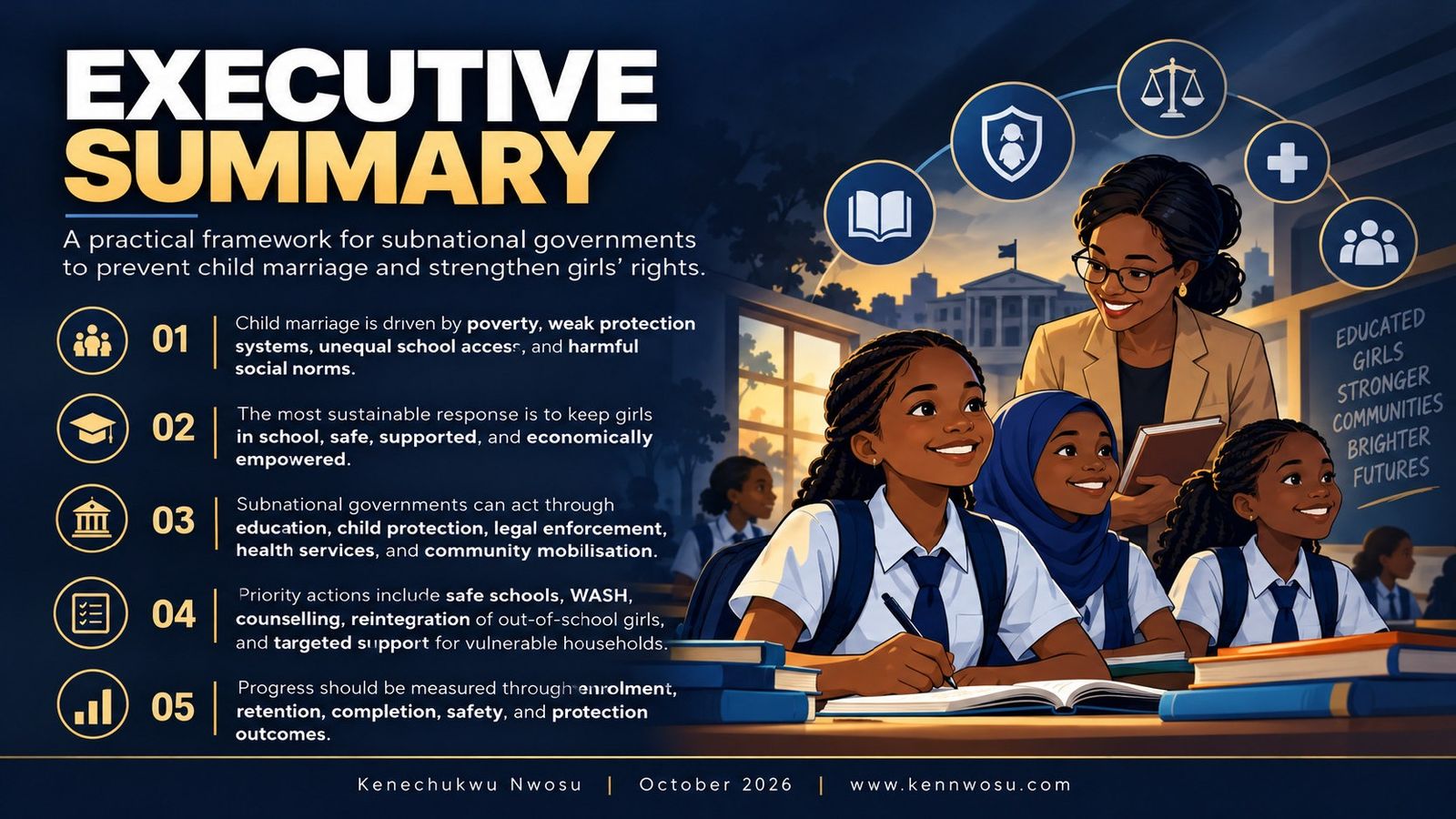
- Child marriage is driven by poverty, weak protection systems, unequal school access, and harmful social norms.
- The most sustainable response is to keep girls in school, safe, supported, and economically empowered.
- Subnational governments can act through education, child protection, legal enforcement, health services, and community mobilisation.
- Priority actions include safe schools, WASH, counselling, reintegration of out-of-school girls, and targeted support for vulnerable households.
- Progress should be measured through enrolment, retention, completion, safety, and protection outcomes.
Why child marriage persists
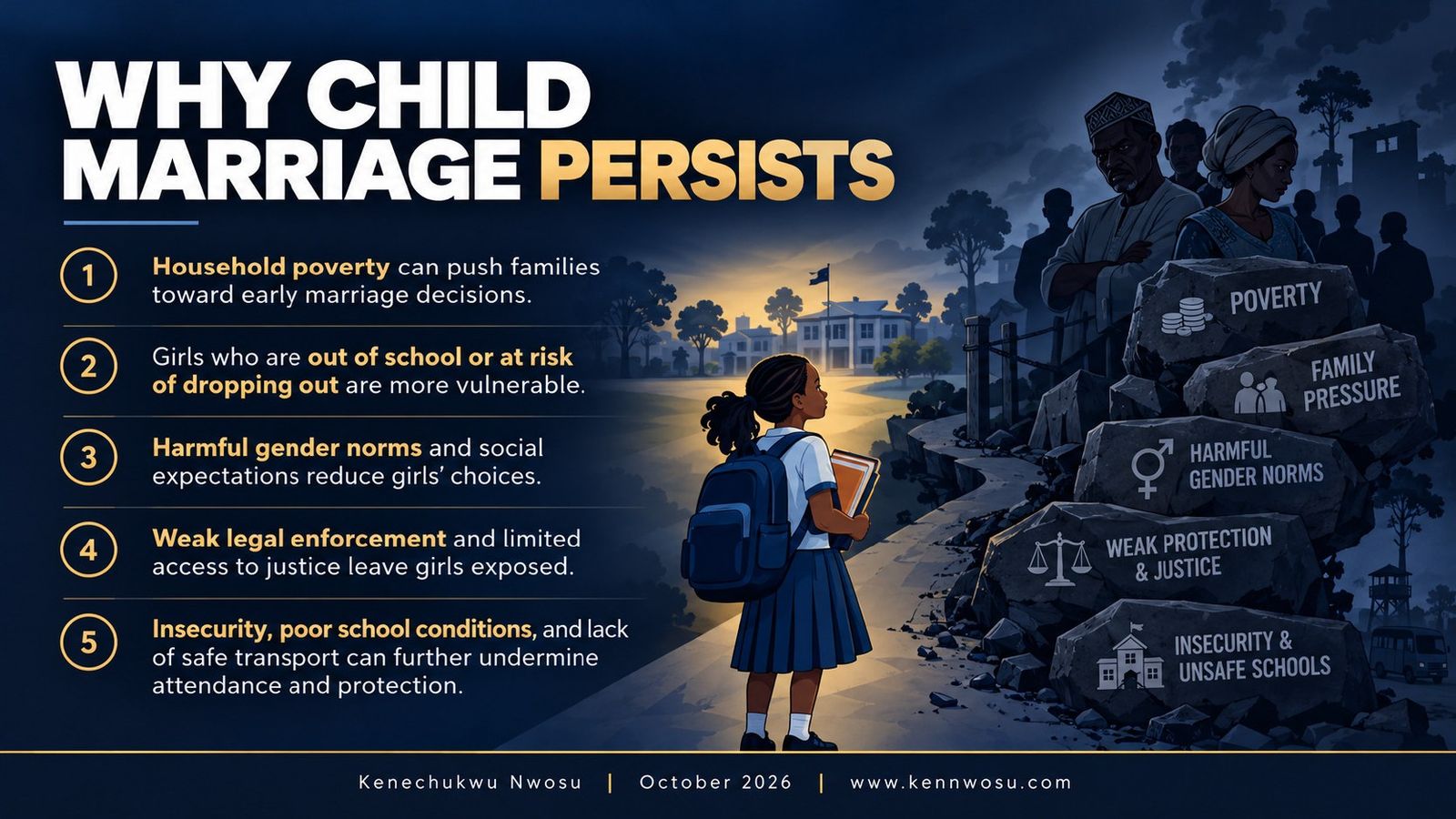
- Household poverty can push families toward early marriage decisions.
- Girls who are out of school or at risk of dropping out are more vulnerable.
- Harmful gender norms and social expectations reduce girls’ choices.
- Weak legal enforcement and limited access to justice leave girls exposed.
- Insecurity, poor school conditions, and lack of safe transport can further undermine attendance and protection.
Education as the first line of prevention
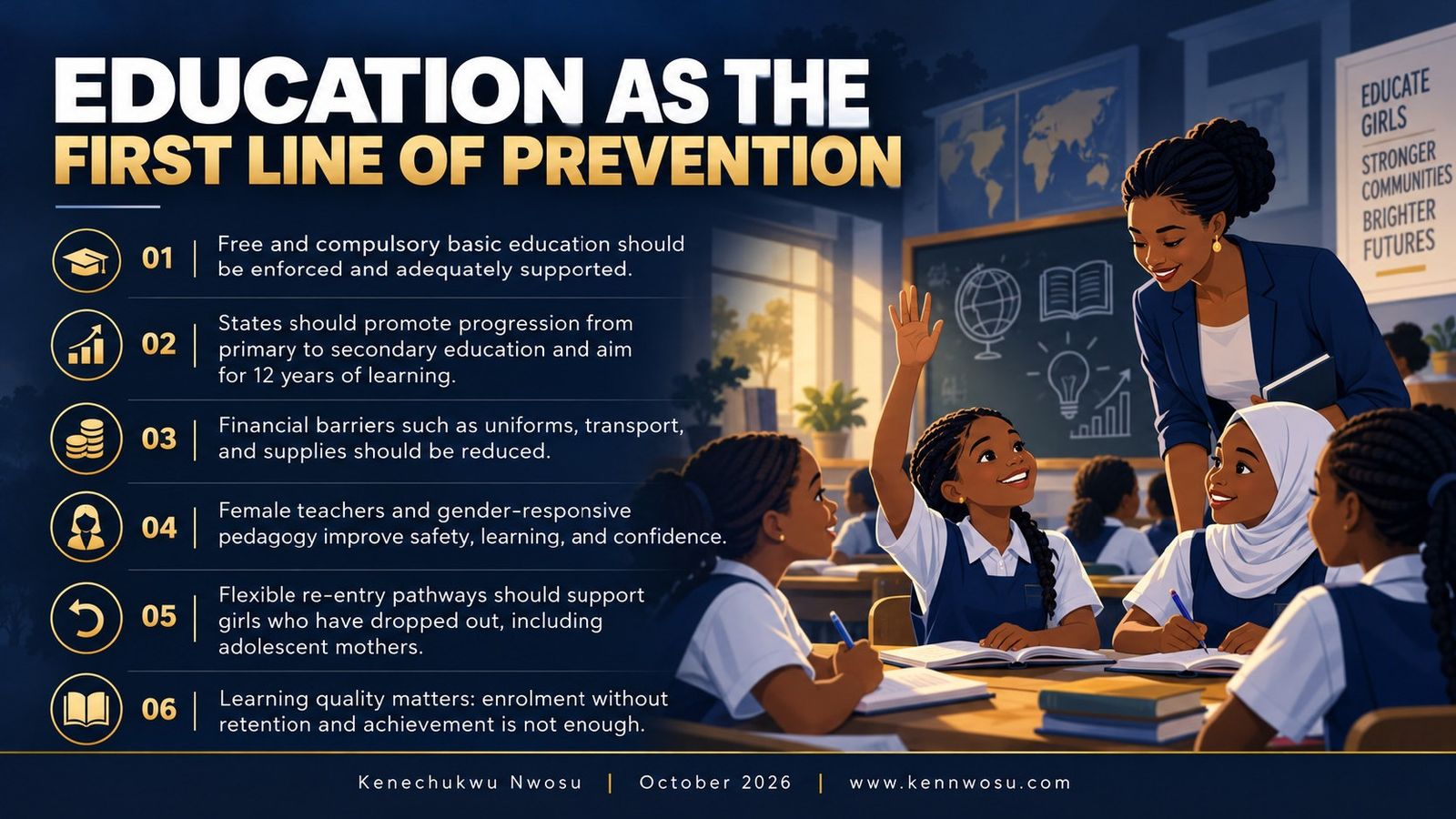
- Free and compulsory basic education should be enforced and adequately supported.
- States should promote progression from primary to secondary education and aim for 12 years of learning.
- Financial barriers such as uniforms, transport, and supplies should be reduced.
- Female teachers and gender-responsive pedagogy improve safety, learning, and confidence.
- Flexible re-entry pathways should support girls who have dropped out, including adolescent mothers.
- Learning quality matters: enrolment without retention and achievement is not enough.
Safe, gender-responsive schools
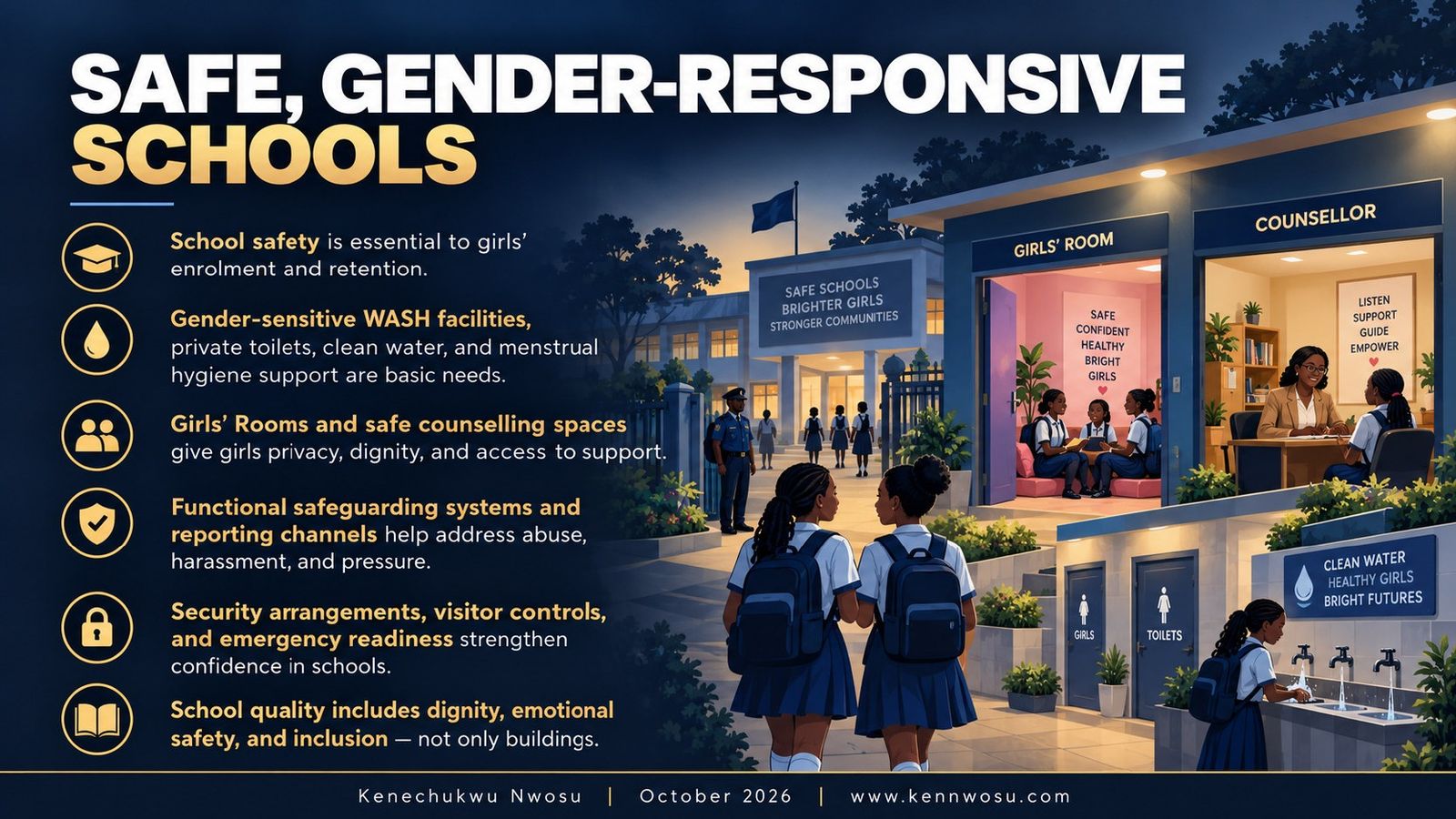
- School safety is essential to girls’ enrolment and retention.
- Gender-sensitive WASH facilities, private toilets, clean water, and menstrual hygiene support are basic needs.
- Girls’ Rooms and safe counselling spaces give girls privacy, dignity, and access to support.
- Functional safeguarding systems and reporting channels help address abuse, harassment, and pressure.
- Security arrangements, visitor controls, and emergency readiness strengthen confidence in schools.
- School quality includes dignity, emotional safety, and inclusion, not only buildings.
Education Marshals and reintegration systems
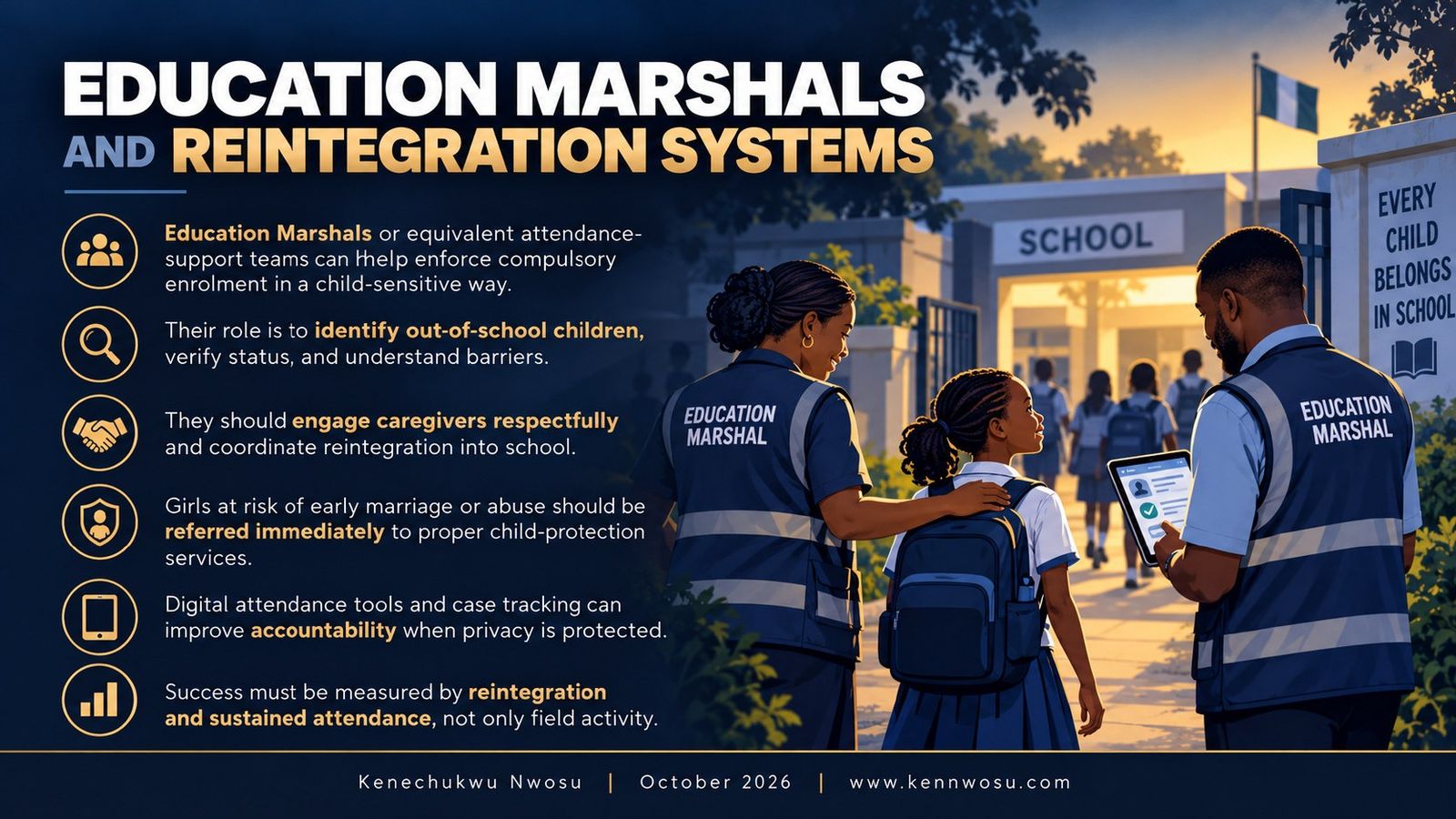
- Education Marshals or equivalent attendance-support teams can help enforce compulsory enrolment in a child-sensitive way.
- Their role is to identify out-of-school children, verify status, and understand barriers.
- They should engage caregivers respectfully and coordinate reintegration into school.
- Girls at risk of early marriage or abuse should be referred immediately to proper child-protection services.
- Digital attendance tools and case tracking can improve accountability when privacy is protected.
- Success must be measured by reintegration and sustained attendance, not only field activity.
Legal, economic and health interventions
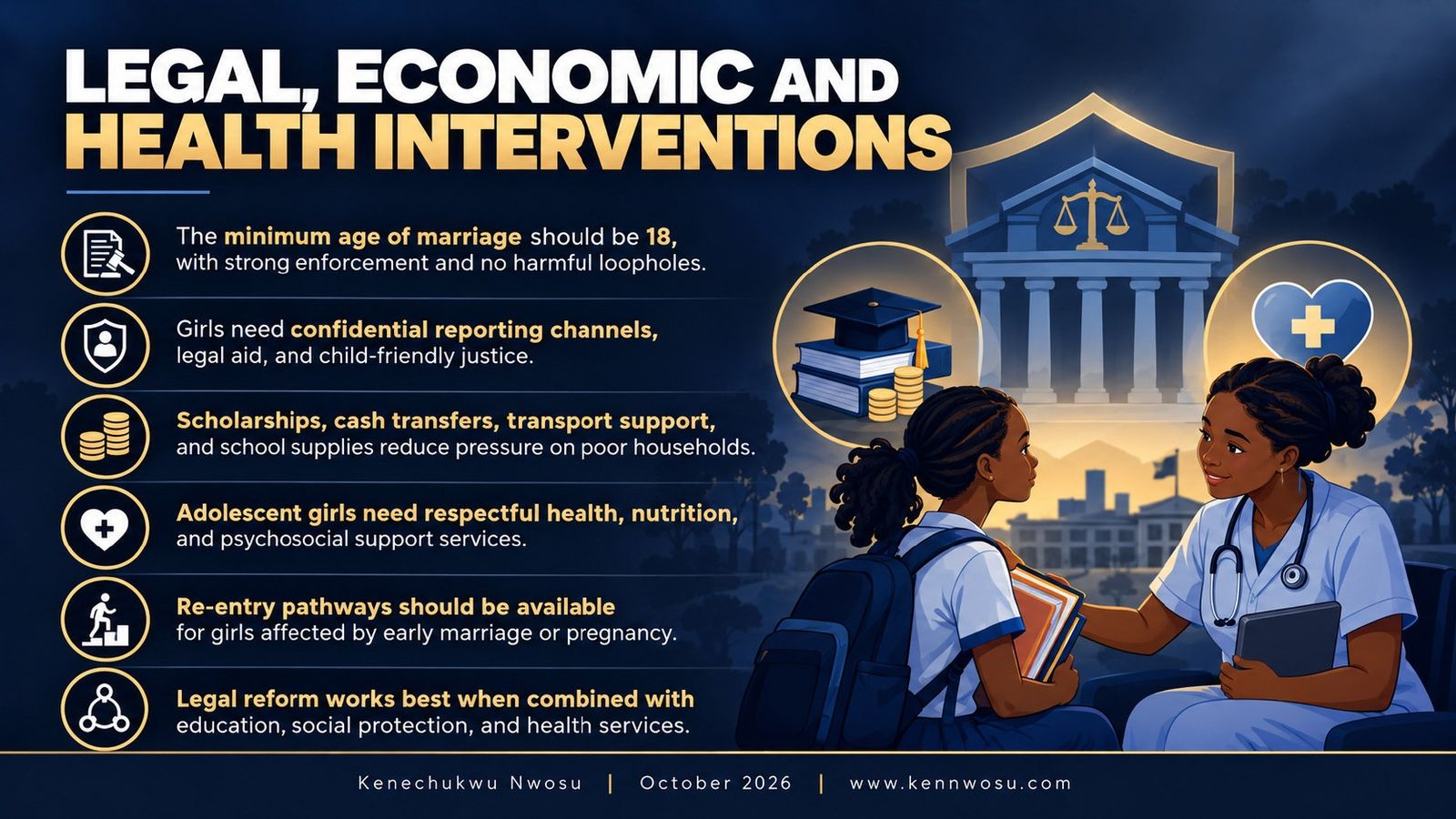
- The minimum age of marriage should be 18, with strong enforcement and no harmful loopholes.
- Girls need confidential reporting channels, legal aid, and child-friendly justice.
- Scholarships, cash transfers, transport support, and school supplies reduce pressure on poor households.
- Adolescent girls need respectful health, nutrition, and psychosocial support services.
- Re-entry pathways should be available for girls affected by early marriage or pregnancy.
- Legal reform works best when combined with education, social protection, and health services.
Community action, STEM and economic empowerment
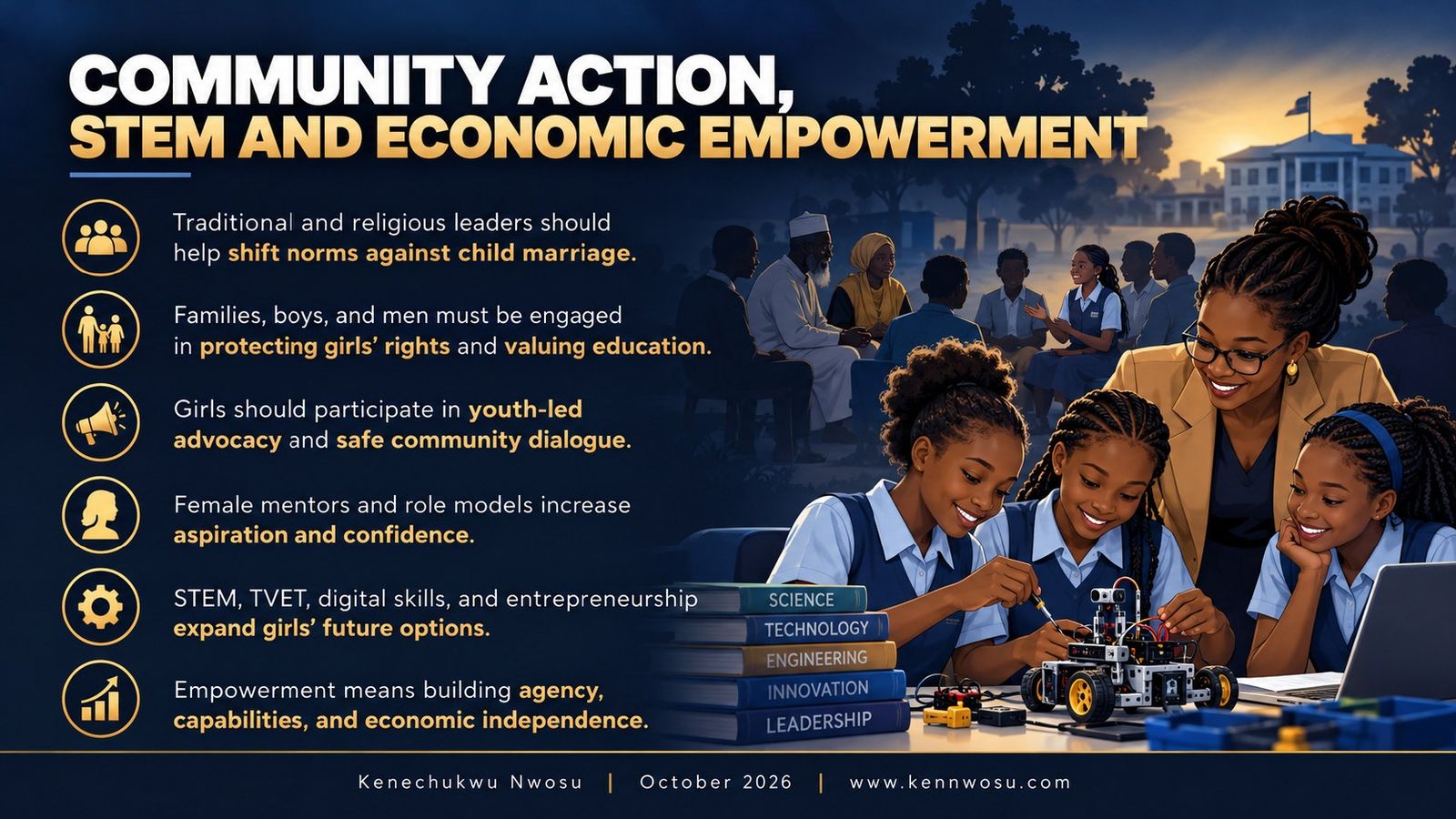
- Traditional and religious leaders should help shift norms against child marriage.
- Families, boys, and men must be engaged in protecting girls’ rights and valuing education.
- Girls should participate in youth-led advocacy and safe community dialogue.
- Female mentors and role models increase aspiration and confidence.
- STEM, TVET, digital skills, and entrepreneurship expand girls’ future options.
- Empowerment means building agency, capabilities, and economic independence.
Implementation roadmap and key metrics
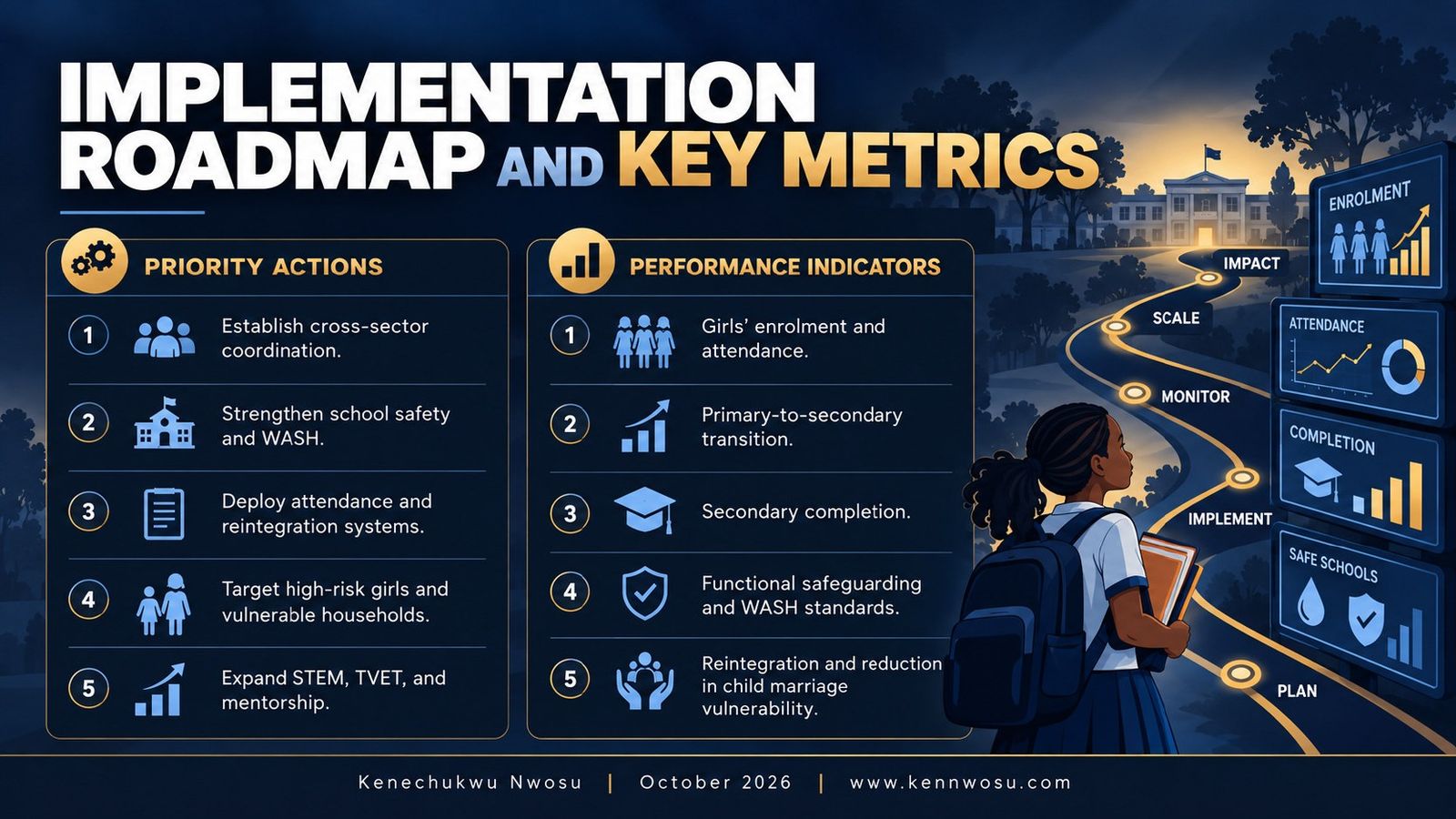
Priority actions
- Establish cross-sector coordination.
- Strengthen school safety and WASH.
- Deploy attendance and reintegration systems.
- Target high-risk girls and vulnerable households.
- Expand STEM, TVET, and mentorship.
Performance indicators
- Girls’ enrolment and attendance.
- Primary-to-secondary transition.
- Secondary completion.
- Functional safeguarding and WASH standards.
- Reintegration and reduction in child marriage vulnerability.
WASH: clean water and handwashing
Functional facilities for safer school attendance.
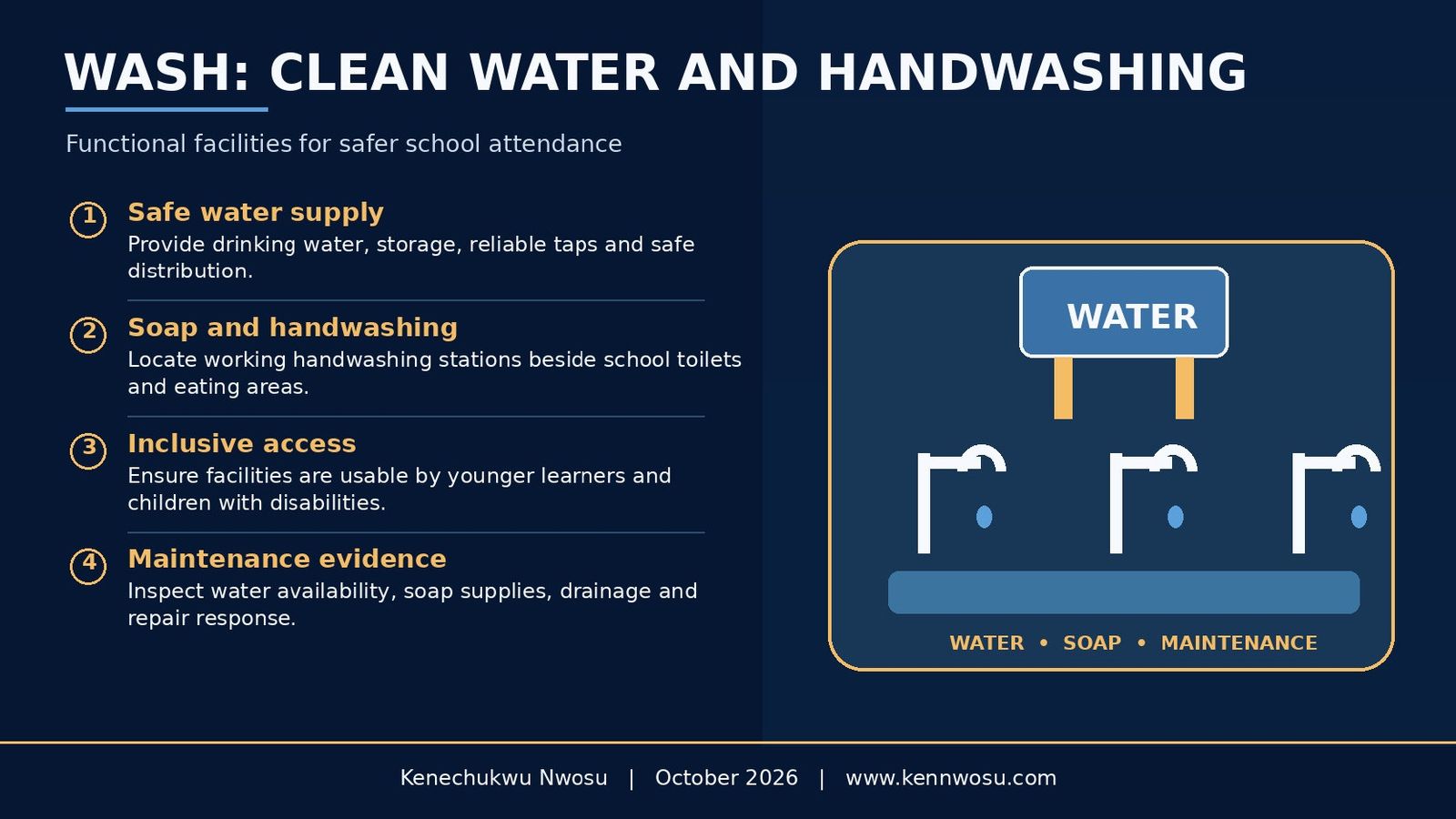
- Safe water supply: provide drinking water, storage, reliable taps and safe distribution.
- Soap and handwashing: locate working handwashing stations beside school toilets and eating areas.
- Inclusive access: ensure facilities are usable by younger learners and children with disabilities.
- Maintenance evidence: inspect water availability, soap supplies, drainage and repair response.
WASH: toilets and menstrual health
Facilities that protect privacy, dignity and attendance.
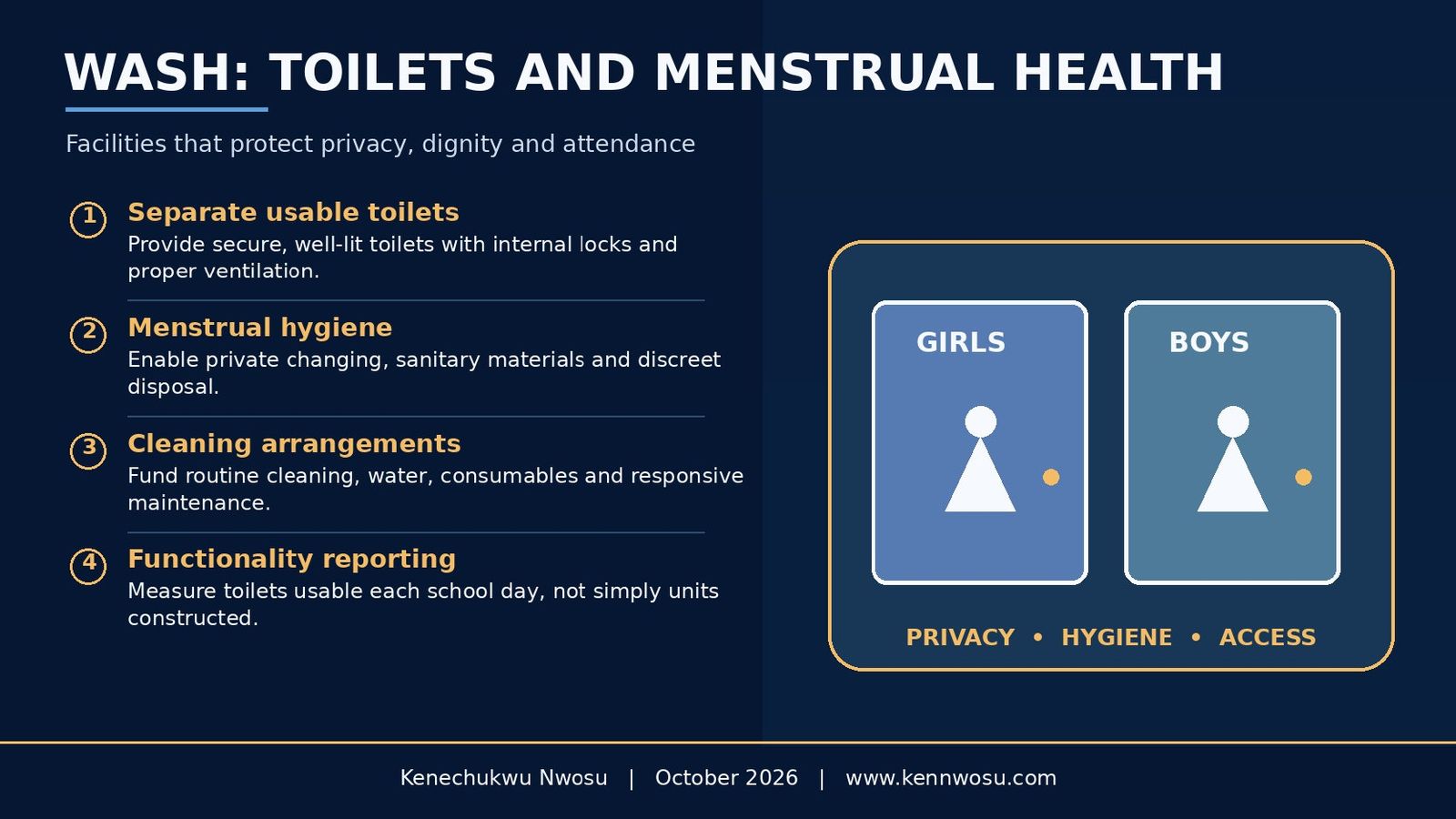
- Separate usable toilets: provide secure, well-lit toilets with internal locks and proper ventilation.
- Menstrual hygiene: enable private changing, sanitary materials and discreet disposal.
- Cleaning arrangements: fund routine cleaning, water, consumables and responsive maintenance.
- Functionality reporting: measure toilets usable each school day, not simply units constructed.
Girls’ rooms and counselling
Safe reporting and coordinated protective support.
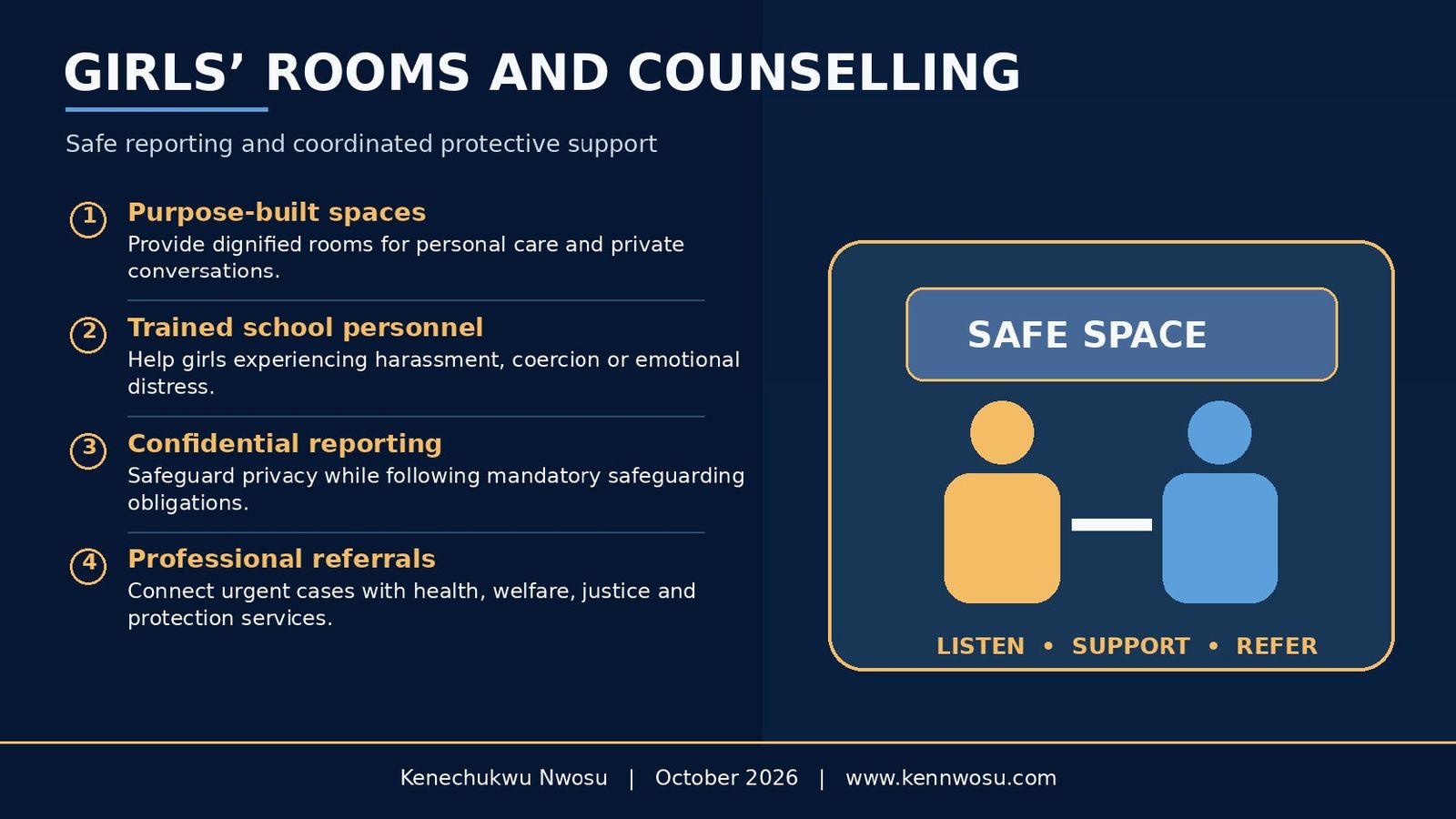
- Purpose-built spaces: provide dignified rooms for personal care and private conversations.
- Trained school personnel: help girls experiencing harassment, coercion or emotional distress.
- Confidential reporting: safeguard privacy while following mandatory safeguarding obligations.
- Professional referrals: connect urgent cases with health, welfare, justice and protection services.
SDG 4 and SDG 5: central targets
Education and gender equality must progress together.
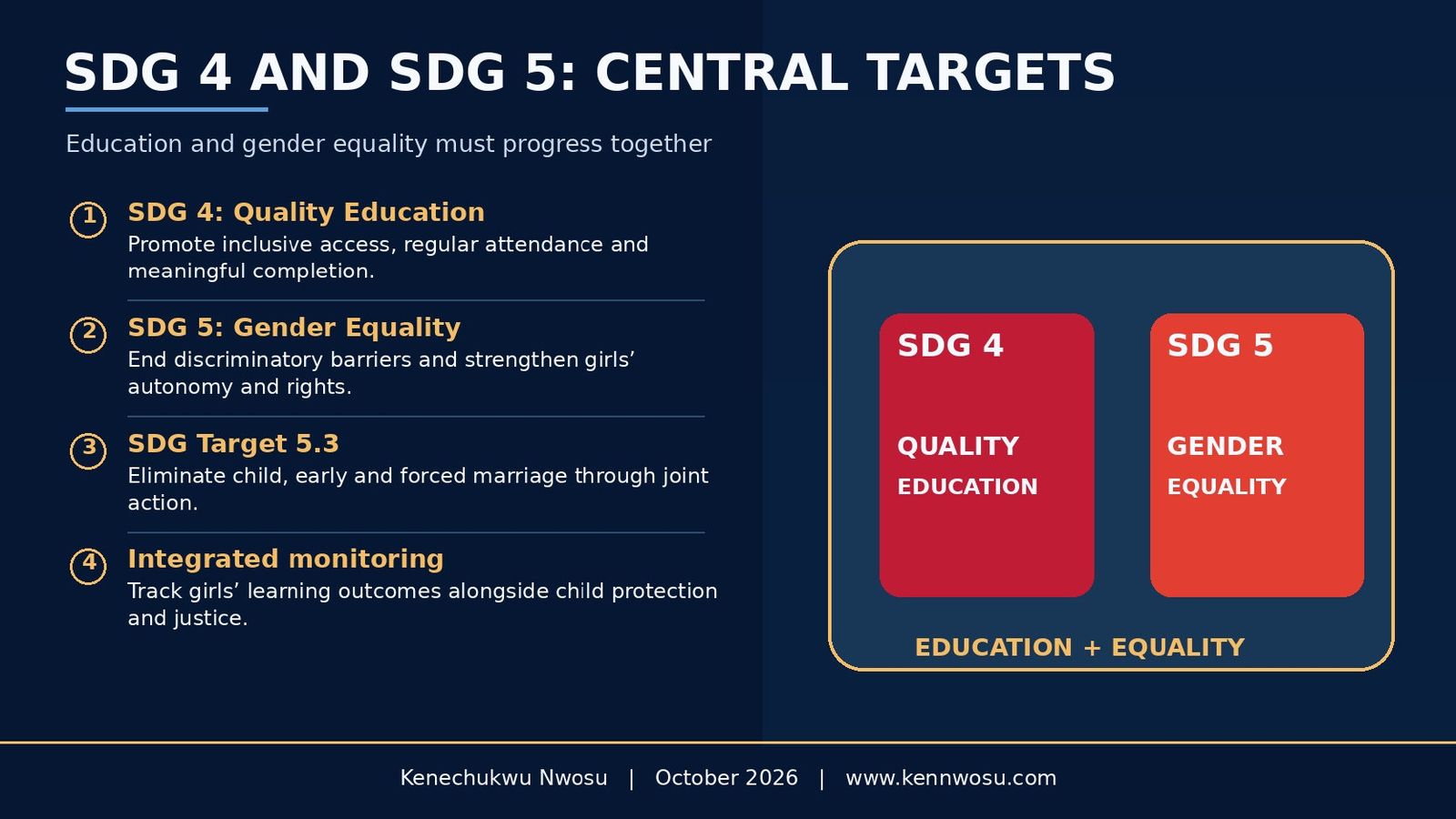
- SDG 4, Quality Education: promote inclusive access, regular attendance and meaningful completion.
- SDG 5, Gender Equality: end discriminatory barriers and strengthen girls’ autonomy and rights.
- SDG Target 5.3: eliminate child, early and forced marriage through joint action.
- Integrated monitoring: track girls’ learning outcomes alongside child protection and justice.
Related SDGs: shared responsibilities
Poverty, health, sanitation, equity and justice.
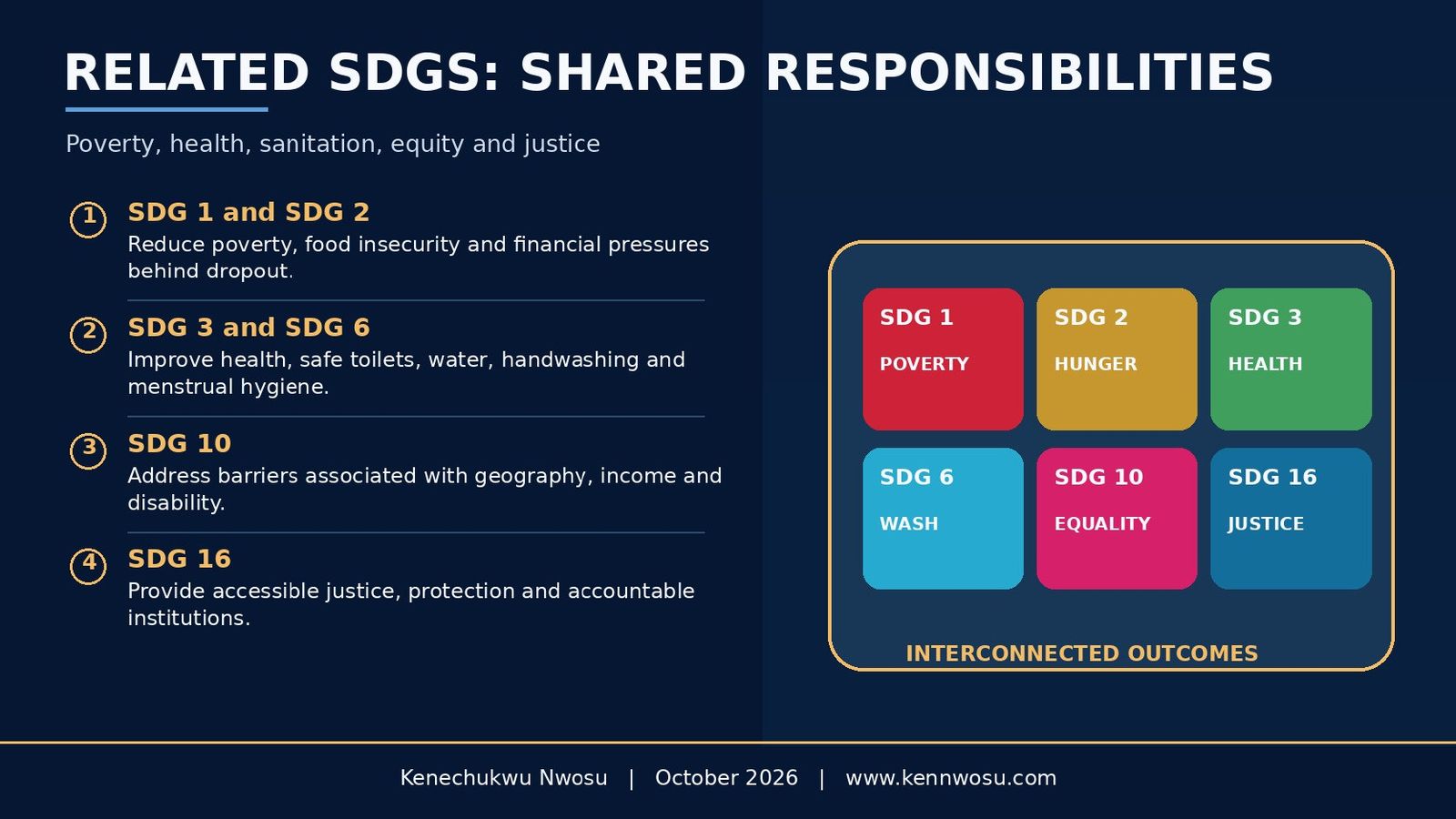
- SDG 1 and SDG 2: reduce poverty, food insecurity and financial pressures behind dropout.
- SDG 3 and SDG 6: improve health, safe toilets, water, handwashing and menstrual hygiene.
- SDG 10: address barriers associated with geography, income and disability.
- SDG 16: provide accessible justice, protection and accountable institutions.
About the author

Kenechukwu Nwosu is an education policy strategist and adviser whose work focuses on education reform, compulsory school enrolment, school improvement, digital learning, child protection, and equitable access to quality education. His interests include policy design, implementation systems, educational governance, and practical frameworks that help subnational governments translate education and child-rights commitments into measurable results.